PhotonAi Edge

Plug and Play AI

Automate material separation in your workflow

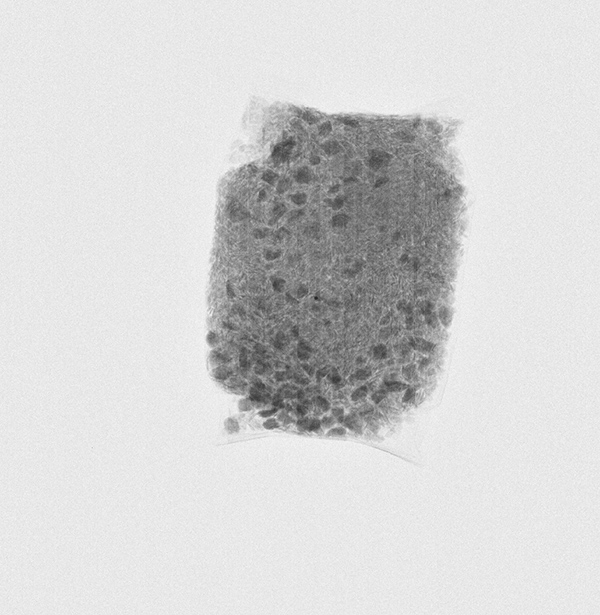
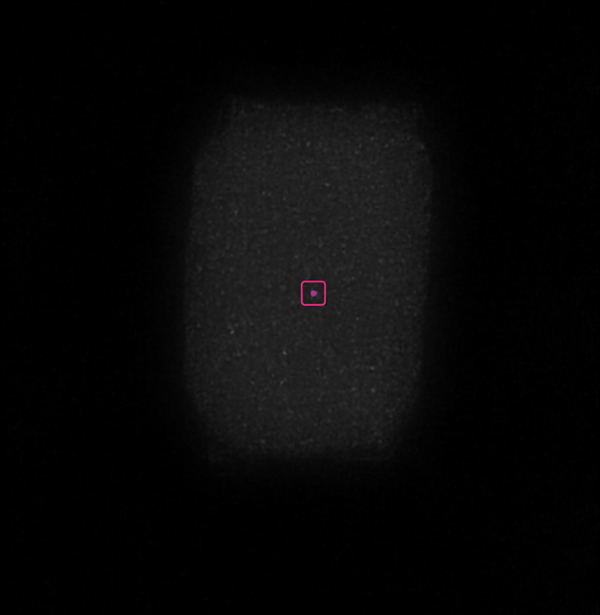
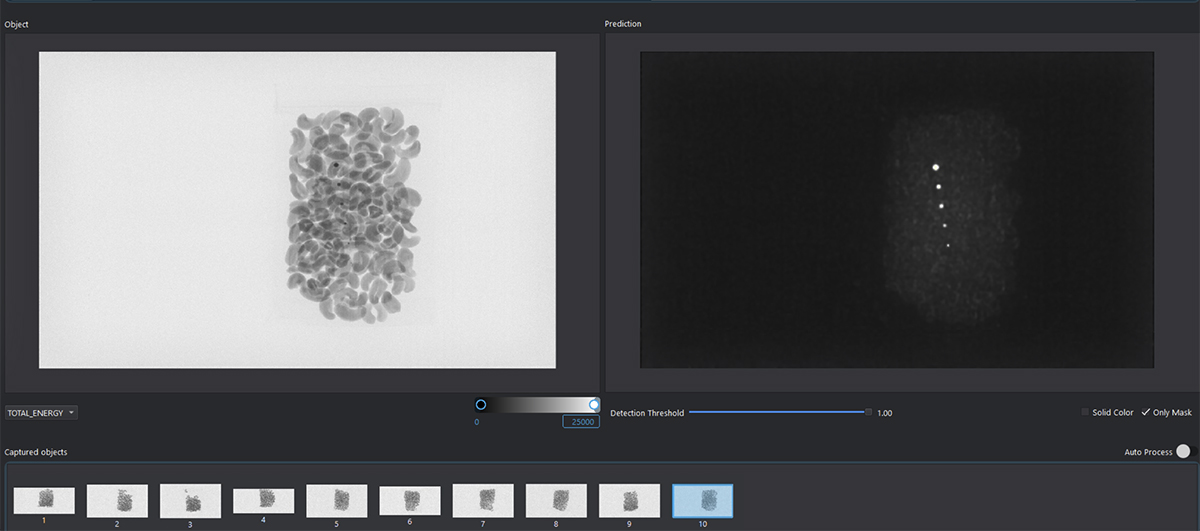
PhotonAi cameras make every photon count and Edge AI makes their spectral power easy to use. Break the X-ray dependancy on density and vision based image features. Edge predicts deviations from the expected physics using the raw photon count signal in up to 4 channels. Anomalies appear with no further image registration or noise reduction needed. Automate material separation in your analysis pipeline to dramatically reduce false rejects and increase detection accuracy across a wider range of products and contaminant types.

Save time and effort with Plug and Play AI

You can save thousands of R&D hours and immediately take advantage of spectral X-ray inspection through our physics informed AI models. Our AI models learn from the physics of inspection systems and outperform conventional mathematical methods for energy separation while enabling automation. Edge AI is fast to configure and fast to train with only a handful of good images. Edge runs models at inference speeds suited to high-speed inspection of packaged products and delivers the data to be directly classified by the user or added as an additional dimension to existing analysis workflows.

Before After

Fast adapt to product and pack changeovers

Fine tune in under a minute to accommodate production changes in packaging format or recipe and maintain the highest possible detection accuracy. The models may be conveniently trained on-device to adapt to a diverse range of products and inspection systems. Each model can be saved and recalled on device at a moments notice. Just Physics: no labels, no post-processing.

Ready to run out of the box

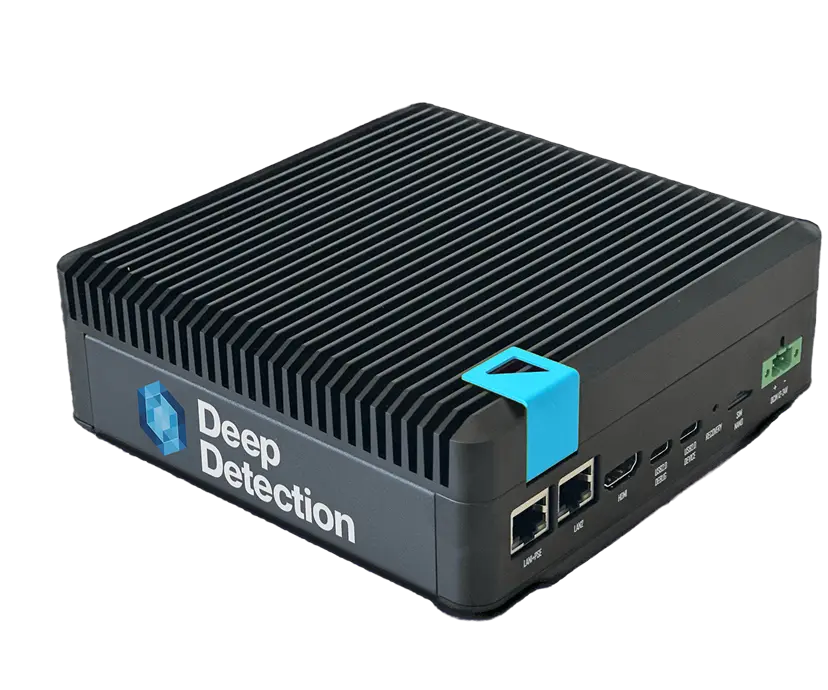
We like to make advanced technology easy to use and our Edge is no exception. With a user friendly web server on board and connectivity to the PhotonAi GUI the device only needs to be connected over ethernet to the image source to start continuous monitoring of product inspection.

Break free from density

Add PhotonAi Edge to your workflow to provide simple, near-instantaneous separation of foreign objects at maximum contrast, achieving the highest possible detection accuracy.